Importing goods from Vietnam has become increasingly popular as companies diversify their supply chains away from China. Vietnam's strategic location, competitive manufacturing costs, and extensive trade agreements make it an ideal sourcing destination.
But the import process can be complex for first-time buyers. This guide covers everything you need to know — from required documents to customs clearance.
Required Documents for Importing from Vietnam
Every shipment from Vietnam requires these standard export/import documents:
- Commercial Invoice: Issued by the Vietnamese supplier. Details the goods, quantities, prices, and terms of sale.
- Packing List: Itemizes the contents of each box/carton, with weights and dimensions.
- Bill of Lading (B/L): Issued by the shipping line. This is your proof of shipment and title to the goods.
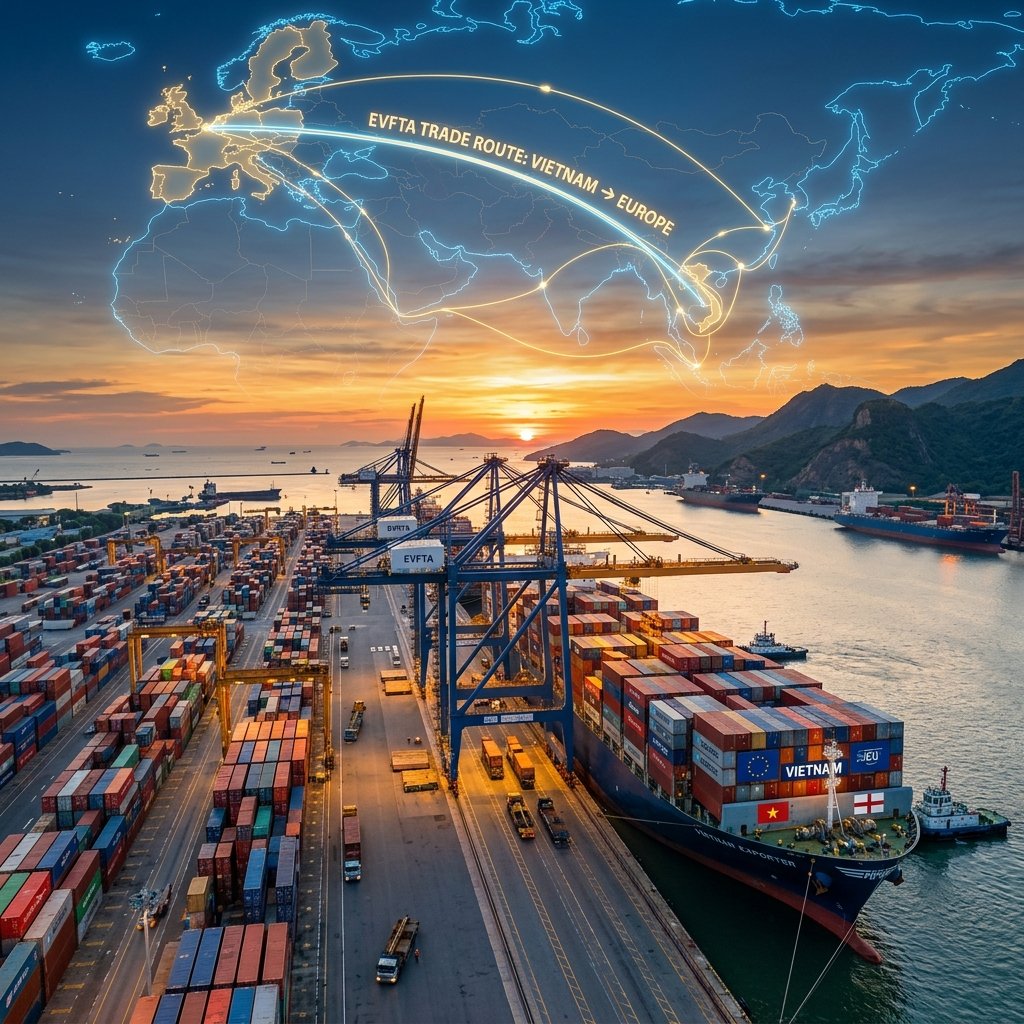
- Certificate of Origin (C/O): Critical for claiming preferential tariff rates under EVFTA, CPTPP, or other FTAs.
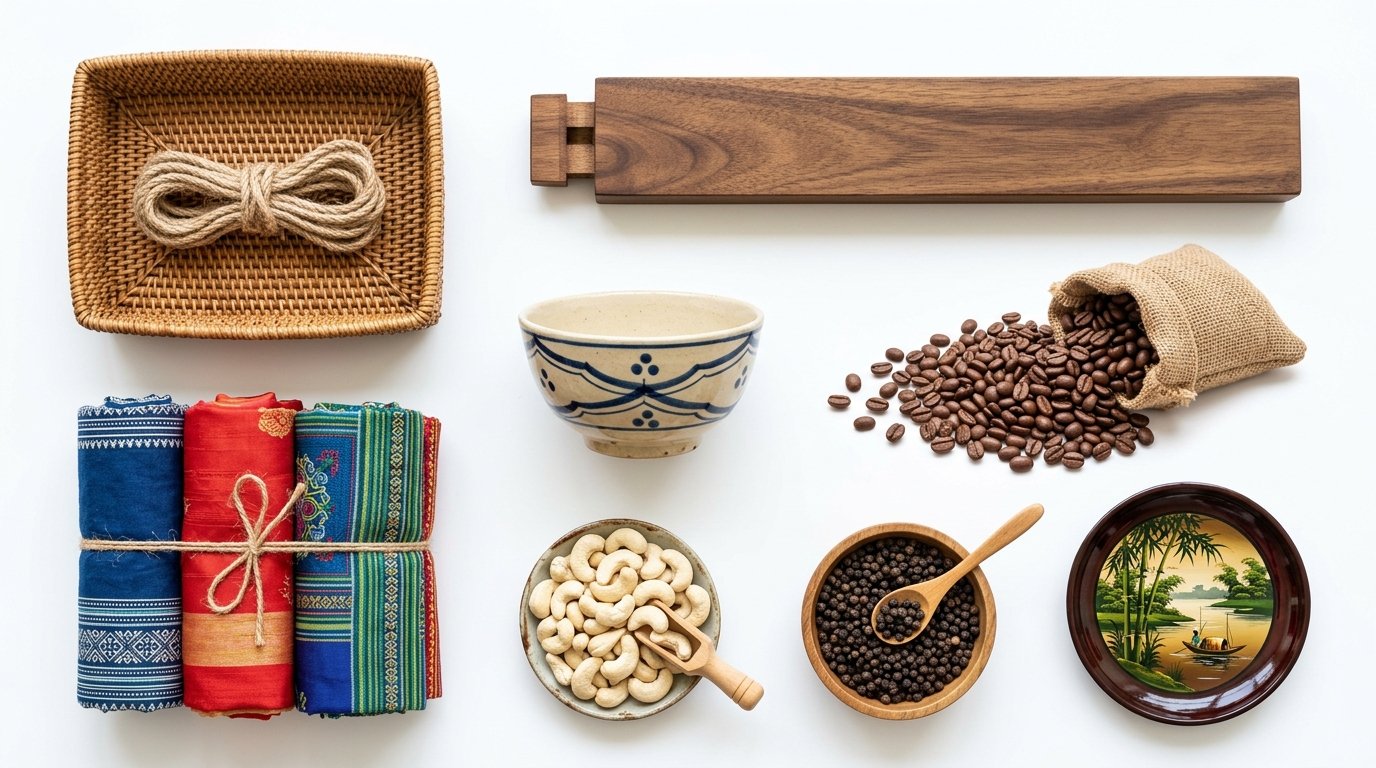
- Phytosanitary Certificate: Required for agricultural products (coffee, pepper, cashew, etc.).
- Fumigation Certificate: Required for wood and plant-based products shipped to most countries.
- Quality Inspection Report: From your QC agent or third-party inspector.
Understanding Incoterms
Incoterms define who is responsible for shipping, insurance, and customs at each stage:
| Incoterm | What It Means | Best For |
|---|---|---|
| FOB (Free On Board) | Supplier delivers goods to the port. You arrange shipping from there. | Most common for experienced importers |
| CIF (Cost, Insurance, Freight) | Supplier arranges shipping and insurance to your port. | First-time importers wanting simplicity |
| EXW (Ex Works) | You handle everything from the factory gate. | Experienced buyers with own freight forwarder |
| DDP (Delivered Duty Paid) | Supplier handles everything including customs clearance at destination. | Hands-off approach |
Our recommendation: FOB is the most common and transparent Incoterm. You control shipping costs and can choose your own freight forwarder.
Shipping Options from Vietnam
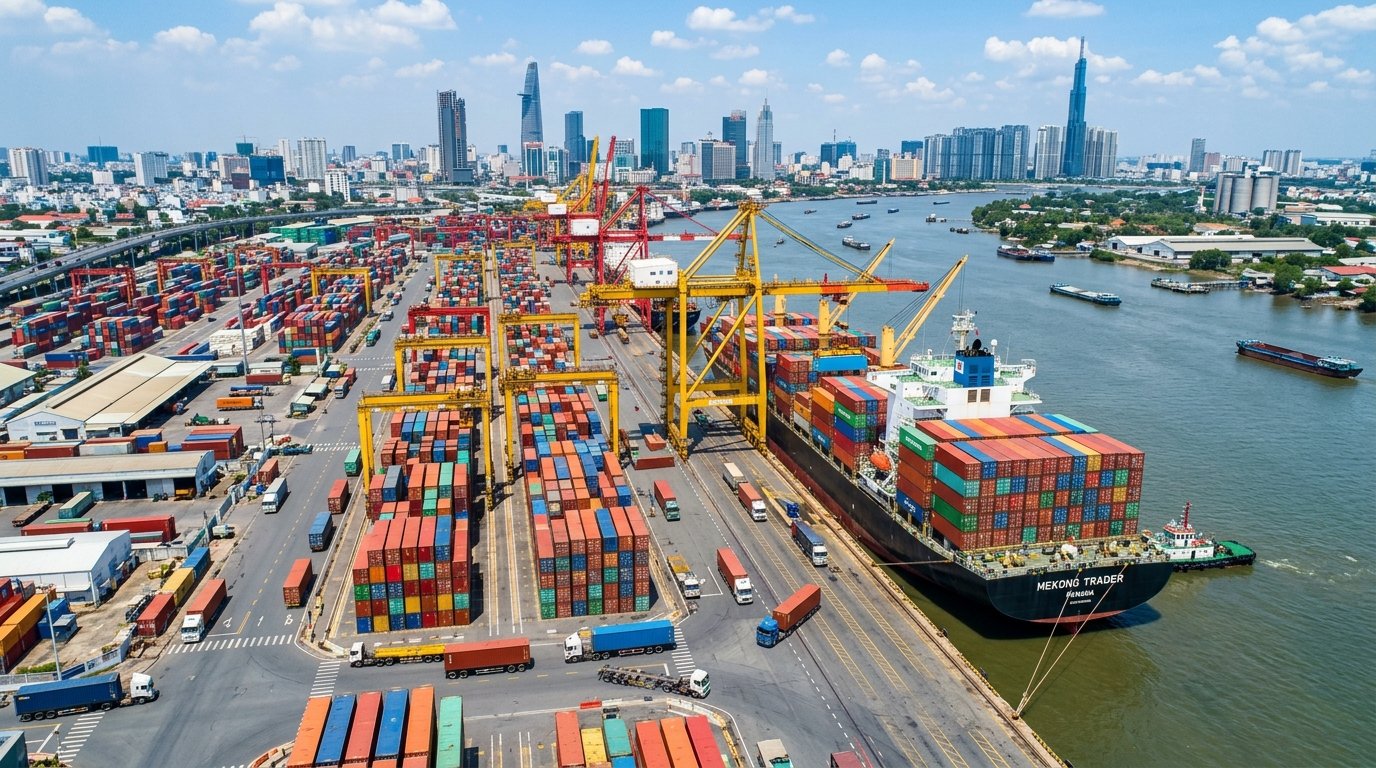
Ocean Freight
- 20ft container: ~33 CBM capacity, 25,000 kg max
- 40ft container: ~67 CBM capacity, 27,500 kg max
- 40ft HC (High Cube): ~76 CBM capacity — best for furniture
- Transit time to US West Coast: 18–22 days
- Transit time to EU (Rotterdam): 25–30 days
- Transit time to Australia: 12–18 days
Air Freight
- Transit time: 3–5 days to most destinations
- Cost: $4–8 per kg (varies by destination and volume)
- Best for: Samples, urgent orders, high-value/low-weight goods
Trade Agreements That Reduce Tariffs
Vietnam has signed several major free trade agreements:
| Agreement | Partners | Key Benefit |
|---|---|---|
| EVFTA | EU 27 countries | Eliminates up to 99% of tariffs on Vietnamese goods |
| CPTPP | 11 countries (Japan, Australia, Canada, etc.) | Significant tariff reductions across many categories |
| UKVFTA | United Kingdom | Continues EVFTA benefits post-Brexit |
| RCEP | 15 Asia-Pacific countries | Streamlined rules of origin |
| ASEAN FTAs | China, Japan, South Korea, India, etc. | Regional trade facilitation |
Important: To claim preferential tariff rates, you must have a valid Certificate of Origin (Form EUR.1 for EVFTA, Form CPTPP, etc.). Your supplier or sourcing agent should arrange this.
Common Import Mistakes to Avoid
- Skipping supplier verification: Sending money to an unverified supplier is the #1 risk. Always verify before you buy.
- No quality inspection: Defects discovered after arrival are expensive to fix. Always inspect before shipping.
- Ignoring compliance requirements: Products entering the US, EU, or Australia must meet specific safety and labeling standards.
- Not getting a Certificate of Origin: Without it, you pay full tariff rates instead of preferential FTA rates.
- Underestimating total landed cost: Include freight, insurance, customs duty, local delivery, and customs broker fees in your cost calculation.
- Paying 100% upfront: Standard terms are 30% deposit, 70% before shipment. Never pay 100% to a new supplier.
Step-by-Step Import Process
- Define your product requirements and target market compliance
- Find and verify Vietnamese manufacturers
- Request quotations, negotiate terms, and confirm order
- Approve samples before production
- Monitor production and conduct quality inspections
- Arrange shipping (or have supplier arrange CIF/DDP)
- Receive shipping documents and arrange customs clearance
- Receive goods at your warehouse
Ready to Import from Vietnam?
Whether you're importing furniture, textiles, coffee, or any other Vietnamese product, having a trusted local partner makes the process significantly easier and safer.
Contact Primo Sourcing for a free consultation. We'll help you navigate the entire process from factory to your door.
Our sourcing team is based in Ho Chi Minh City, Vietnam with 10+ years of hands-on experience visiting factories, auditing suppliers, and managing export orders for international buyers across 30+ countries. Articles are based on our first-hand sourcing experience and verified industry data.
Learn more about our team →