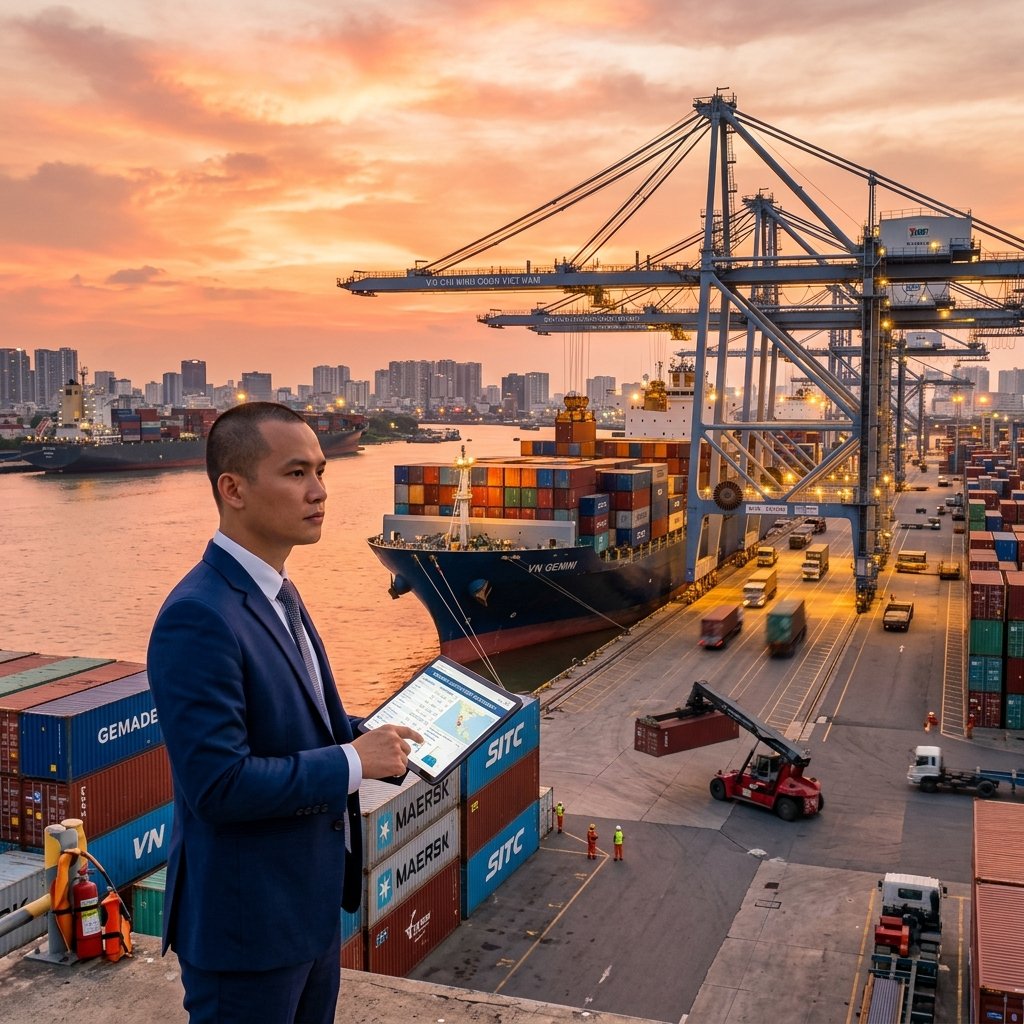
Why Choose Vietnam for Manufacturing in 2026?
Vietnam has firmly established itself as one of the world's most attractive manufacturing hubs for international sourcing. In 2026, the country offers a unique combination of competitive labor costs, highly skilled workers in key industries (such as textiles, furniture, and electronics), and a strategic geographic location in Southeast Asia. Additionally, Vietnam's aggressive participation in global Free Trade Agreements (FTAs) allows importers to significantly reduce their tariff burdens, making it a highly profitable alternative to traditional manufacturing powerhouses.
Beyond cost savings, Vietnam is actively investing in its infrastructure. Deep-water ports like Cai Mep-Thi Vai in the south and Lach Huyen in the north have been expanded to accommodate massive container ships, reducing transit times to North America and Europe. The government's push towards high-tech manufacturing and sustainable energy also means factories are increasingly capable of meeting strict ESG (Environmental, Social, and Governance) compliance requirements from global brands.
How to Find Reliable Suppliers in Vietnam?
Finding a reliable supplier in Vietnam requires looking beyond basic internet searches. To find trustworthy manufacturers in Vietnam, importers should utilize professional B2B directories, attend major local trade shows like Vietnam Expo or VIFA (for furniture), and partner with experienced local sourcing agents. A local agent helps bridge the language barrier, conducts on-site factory audits, verifies business licenses, and ensures the manufacturer has the actual production capacity and quality standards required for your specific product line.
While platforms like Alibaba have Vietnamese suppliers, the most capable factories often do not have a strong online marketing presence in English. This is where a localized approach becomes crucial.
1. Leveraging Trade Shows
Attending trade shows is one of the most effective ways to meet factory owners face-to-face. Key exhibitions include:
- VIFA Expo: The premier event for wooden furniture and home decor.
- SaigonTex: Essential for textiles, garments, and fabric sourcing.
- VietnamPlas: For plastic and rubber manufacturing.
2. Partnering with a Sourcing Agency
A reputable sourcing agency acts as your local office. Agencies like BuyGoodsFromVietnam provide end-to-end services, from supplier shortlisting to final shipment loading. They possess the local network needed to bypass trading companies and connect you directly with the source manufacturers, ensuring you get the best factory-direct pricing.
What Are the Tariffs and Trade Agreements When Importing from Vietnam?
Importing from Vietnam offers substantial tariff advantages due to the country's extensive network of Free Trade Agreements. For European buyers, the EU-Vietnam Free Trade Agreement (EVFTA) eliminates nearly 99% of customs duties over a set period. For importers in the Americas and Asia, the CPTPP (Comprehensive and Progressive Agreement for Trans-Pacific Partnership) drastically lowers trade barriers. US importers also benefit because Vietnam currently faces significantly lower Section 301 tariffs compared to other Asian manufacturing hubs, making it an ideal "China Plus One" strategy destination.
To fully leverage these agreements, importers must ensure their suppliers can provide accurate Certificates of Origin (C/O). For example, the EUR.1 movement certificate is required for EVFTA benefits. Working with a knowledgeable local partner ensures all export documentation is perfectly prepared to prevent delays and unexpected customs fees at the destination port.
How to Manage Quality Control (QC) in Vietnam?
Managing quality control when sourcing from Vietnam involves implementing strict inspection protocols at every stage of production. To ensure product quality, importers must establish clear defect tolerances (AQL), conduct Pre-Production Meetings (PPM) to verify materials, perform During Production (DUPRO) inspections to catch early systemic errors, and mandate a Pre-Shipment Inspection (PSI) before containers are loaded. Never rely solely on a factory's internal QC; always use independent third-party inspectors.
Language barriers and cultural differences in interpreting "acceptable quality" can lead to significant issues. A defect that a local factory might consider minor could render a product unsellable in a premium Western market.
AQL Inspections and Lab Testing
The Acceptable Quality Limit (AQL) standard is the international benchmark for product inspections. A typical standard is AQL 2.5 for major defects and 4.0 for minor defects.
- Pre-Production Inspection (PPI): Verifying raw materials and prototype samples before mass production begins.
- During Production Inspection (DUPRO): Checking the first 10-20% of finished goods. This is critical for catching issues before the entire order is ruined.
- Pre-Shipment Inspection (PSI): The final check of the packaged goods, ensuring correct labeling, packaging integrity, and overall product quality.
The Step-by-Step Sourcing Process
To succeed in Vietnam, follow this proven framework:
- Product Specification: Create an exhaustive Tech Pack or Spec Sheet. Leave zero room for interpretation.
- Supplier Shortlisting: Identify 3-5 potential factories and request initial quotations (RFQ).
- Sample Development: Pay for and approve a "Golden Sample." This sample becomes the absolute standard for mass production.
- Factory Audit: Conduct a physical audit to verify social compliance, capacity, and machinery.
- Contracting: Sign a robust manufacturing agreement that includes penalties for late delivery and quality failures.
- Production & QC: Monitor production closely and execute DUPRO and PSI inspections.
- Logistics: Coordinate with freight forwarders for FOB or CIF shipping terms.
Conclusion
Sourcing from Vietnam in 2026 presents an incredible opportunity for global businesses to diversify their supply chains, reduce costs, and access high-quality manufacturing. However, success requires meticulous planning, a deep understanding of local trade dynamics, and rigorous quality control protocols. By leveraging local expertise and maintaining strict oversight, importers can build highly profitable and sustainable supply chains in Vietnam.