Vietnam has emerged as one of the world's most attractive manufacturing destinations for international buyers. With competitive labor costs, favorable trade agreements (EVFTA, CPTPP), and strong expertise in furniture, textiles, food, and industrial goods, sourcing from Vietnam can significantly reduce your production costs while maintaining quality.
But how do you actually source products from Vietnam — especially if you've never done it before? This guide walks you through the entire process, from defining your requirements to receiving goods at your warehouse.
Why Source Products from Vietnam?
Before diving into the process, here's why Vietnam has become a global sourcing hub:
- Cost advantage: Manufacturing costs are 15–30% lower than China for many product categories
- Trade agreements: EVFTA (EU), CPTPP, UKVFTA — reducing or eliminating import tariffs
- Young workforce: Median age of 31, with strong work ethic and growing technical skills
- China Plus One: Many companies are diversifying supply chains away from China
- Export expertise: Vietnam exported over $370 billion in goods in 2025 (Source: Vietnam Customs)
Step 1: Define Your Product Requirements
The foundation of successful sourcing is a clear product specification. Before contacting any supplier, prepare:
- Product specifications: Dimensions, materials, colors, weight, functionality
- Quality standards: What certifications or compliance requirements apply (CE, UL, Prop 65, REACH)?
- Target price: What's your landed cost budget? Work backward from your retail price.
- Quantity: What's your initial order quantity and annual forecast?
- Timeline: When do you need the first shipment?
- Packaging requirements: Retail-ready, bulk, or flat-pack?
Pro tip from our team: The more specific your requirements, the more accurate quotes you'll receive. Vague specifications lead to misunderstandings and quality issues.
Step 2: Find Potential Manufacturers
There are several ways to find Vietnamese manufacturers:
Option A: Use a Vietnam Sourcing Agent (Recommended)
A Vietnam sourcing agent like Primo Sourcing has an established network of verified factories. We search our network of 200+ pre-screened manufacturers to find the best match for your product. This is the fastest and safest approach for most international buyers.
Option B: Online B2B Platforms
Platforms like Alibaba, Made-in-Vietnam, and GlobalSources list Vietnamese suppliers. However, many listings are from trading companies, not actual factories. Always verify before placing orders.
Option C: Trade Shows
Vietnam's major trade shows include VIFA-EXPO (furniture), Vietnam Expo, and Saigon Textile & Garment Expo. These allow face-to-face meetings with manufacturers.
Option D: Industry Associations
Organizations like VIFOREST (Vietnam Timber and Forest Product Association), VITAS (Vietnam Textile and Apparel Association), and VICOFA (Vietnam Coffee and Cocoa Association) can provide manufacturer directories.
Step 3: Verify Suppliers
This is the most critical step. Never skip supplier verification:
- Check business registration and export license
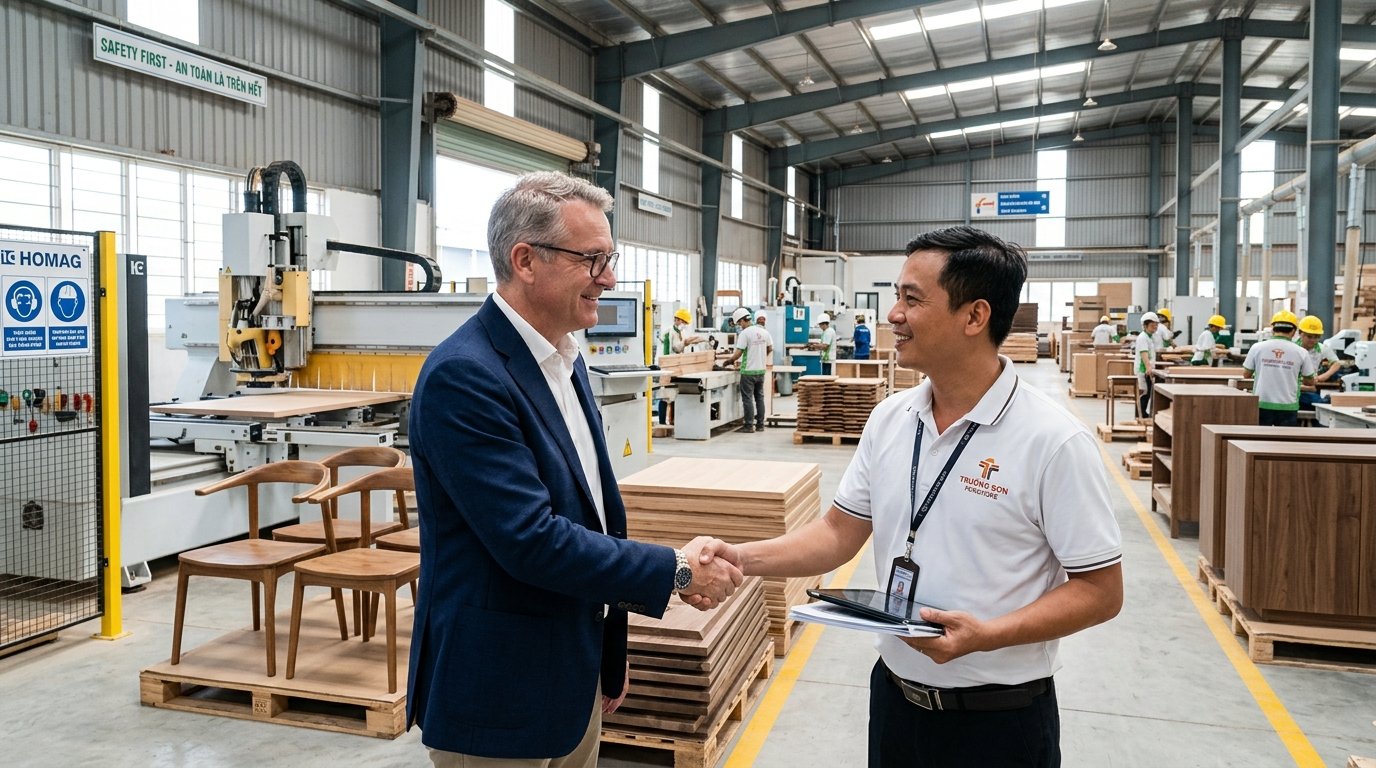
- Visit the factory in person (or have your agent visit)
- Verify they are a real manufacturer, not a trading company
- Review their export history and international buyer references
- Assess production capacity and quality control systems
Red flags to watch for: No factory visit allowed, showroom-only operations, unusually low prices, reluctance to share business documents, inconsistent information about capacity or capabilities.
Step 4: Request Quotations & Negotiate
Once you have 3–5 verified suppliers, request detailed quotations:
- Unit price (FOB or CIF)
- Minimum Order Quantity (MOQ)
- Sample cost and timeline
- Production lead time
- Payment terms
- Packaging and labeling options
Negotiation tips:
- Don't always choose the cheapest option — lowest price often means quality shortcuts
- Negotiate MOQ for first orders (many factories will reduce MOQ to build the relationship)
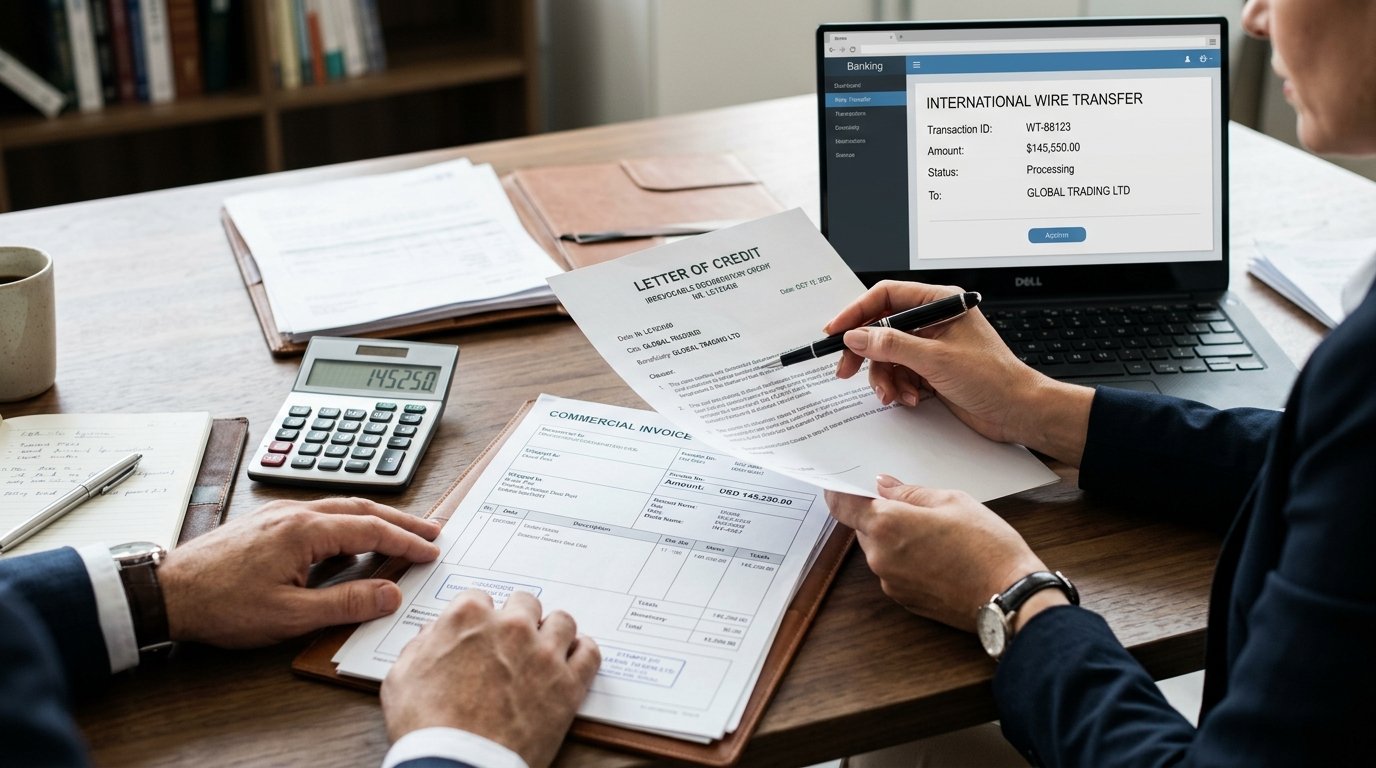
- Standard payment terms: 30% deposit, 70% before shipment (T/T)
- For larger orders, consider Letter of Credit (L/C) for mutual protection
Step 5: Sample Development
Always request and approve samples before production:
- Request a pre-production sample (cost: $50–500 depending on product complexity)
- Review the sample against your specifications
- Request revisions if needed (budget 2–3 revision rounds)
- Formally approve the final sample in writing
- Keep the approved sample for QC reference during production
Timeline: Sample development typically takes 2–4 weeks per round.
Step 6: Production & Quality Control
Once samples are approved and production begins, quality control is essential:
| Inspection Type | When | Purpose |
|---|---|---|
| Pre-Production (PPI) | Before production starts | Verify raw materials and setup |
| During Production (DUPRO) | At 20–40% completion | Catch defects early |
| Pre-Shipment (PSI) | At 80–100% completion | Final quality gate |
| Container Loading | During loading | Verify quantity and condition |
Learn more about our quality control services and pricing.
Step 7: Shipping & Logistics
Common shipping methods from Vietnam:
- Ocean freight (FCL): Full container load — most cost-effective for large orders. Transit: 18–22 days to US West Coast, 25–35 days to EU.
- Ocean freight (LCL): Less than container load — for smaller shipments. Share container space.
- Air freight: 3–5 days transit. Expensive but fast. Best for samples or urgent orders.
Your sourcing agent or freight forwarder will handle: commercial invoice, packing list, bill of lading, certificate of origin, and customs clearance documentation.
What Can You Source from Vietnam?
Vietnam's strongest export categories:
- Furniture: Solid wood, rattan, bamboo, outdoor ($14+ billion annual exports)
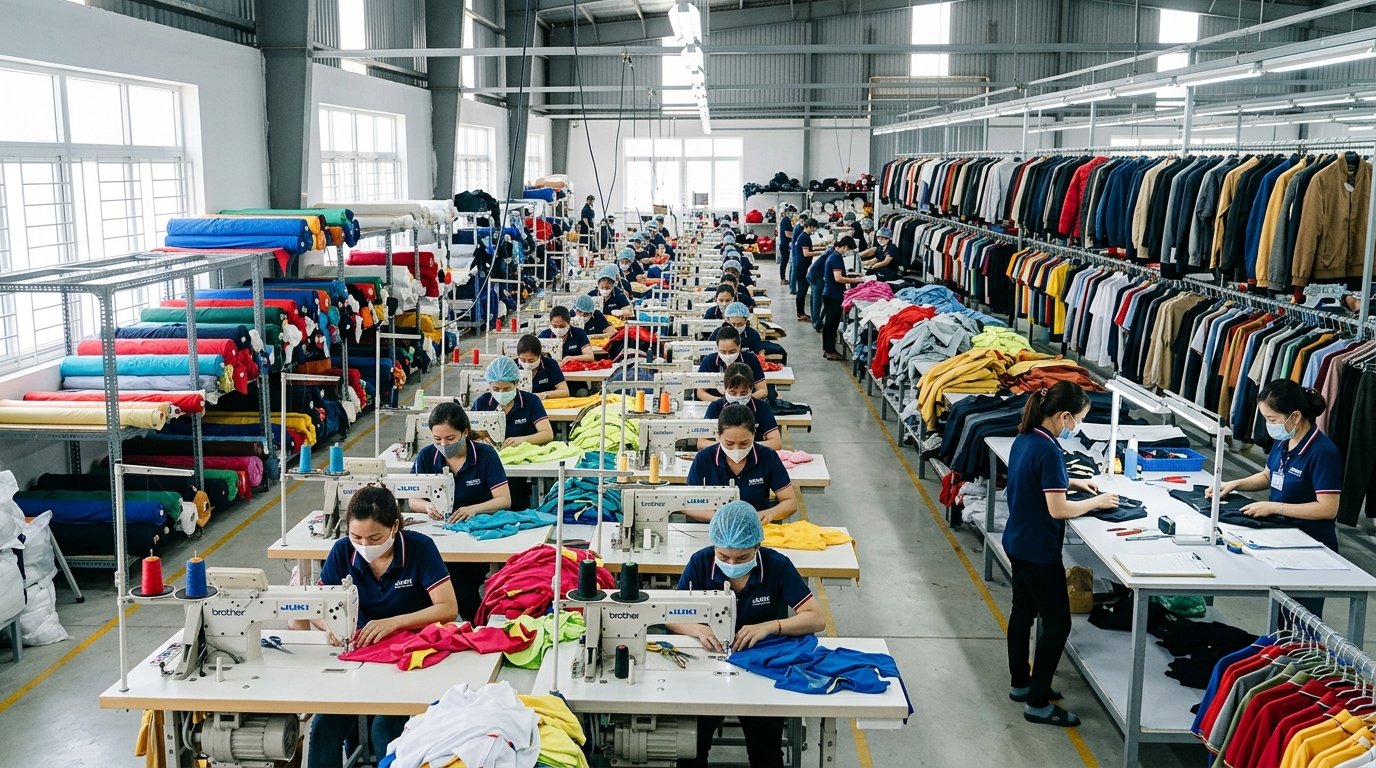
- Textiles & Garments: Cotton, sportswear, workwear, private label
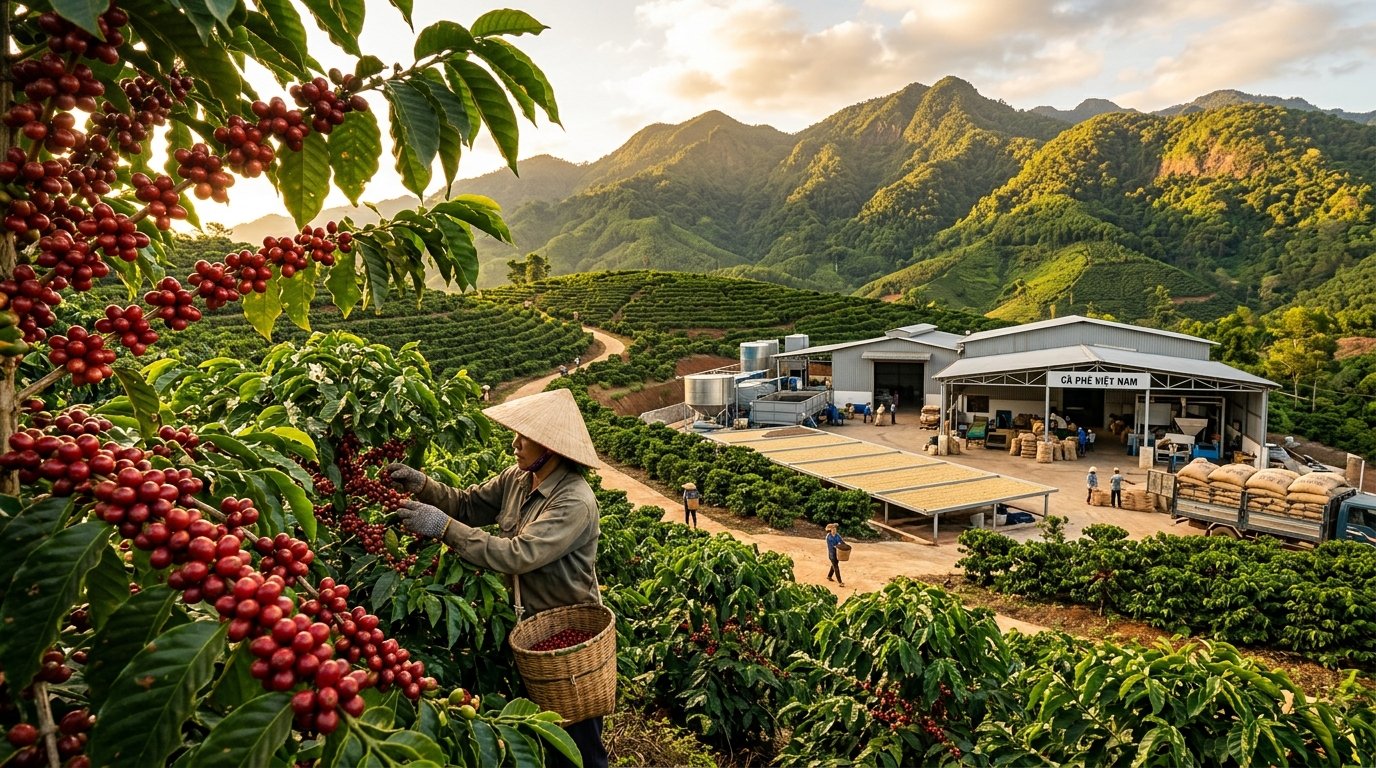
- Coffee & Agriculture: World's #2 coffee exporter, plus cashew, pepper, rice
- Handicrafts: Lacquerware, pottery, ceramics, bamboo baskets
- Industrial Goods: Wood pellets, charcoal, biomass, packaging
Browse our product catalog to see examples.
How Much Does It Cost to Source from Vietnam?
| Cost Component | Typical Range |
|---|---|
| Sourcing agent fee | 5–8% of FOB value |
| Samples | $50–500 per product |
| QC inspection | $180–280 per day |
| Ocean freight (20ft container to US) | $3,000–6,000 |
| Ocean freight (20ft container to EU) | $2,500–5,000 |
See our complete sourcing fees breakdown.
Bottom Line
Sourcing from Vietnam is a proven strategy for reducing costs while accessing quality manufacturing. The key success factors are: thorough supplier verification, clear product specifications, professional quality control, and — ideally — a trusted local partner who knows the market.
If you're ready to start sourcing from Vietnam, contact our team for a free consultation. We'll help you find the right manufacturers for your products.
Our sourcing team is based in Ho Chi Minh City, Vietnam with 10+ years of hands-on experience visiting factories, auditing suppliers, and managing export orders for international buyers across 30+ countries. Articles are based on our first-hand sourcing experience and verified industry data.
Learn more about our team →