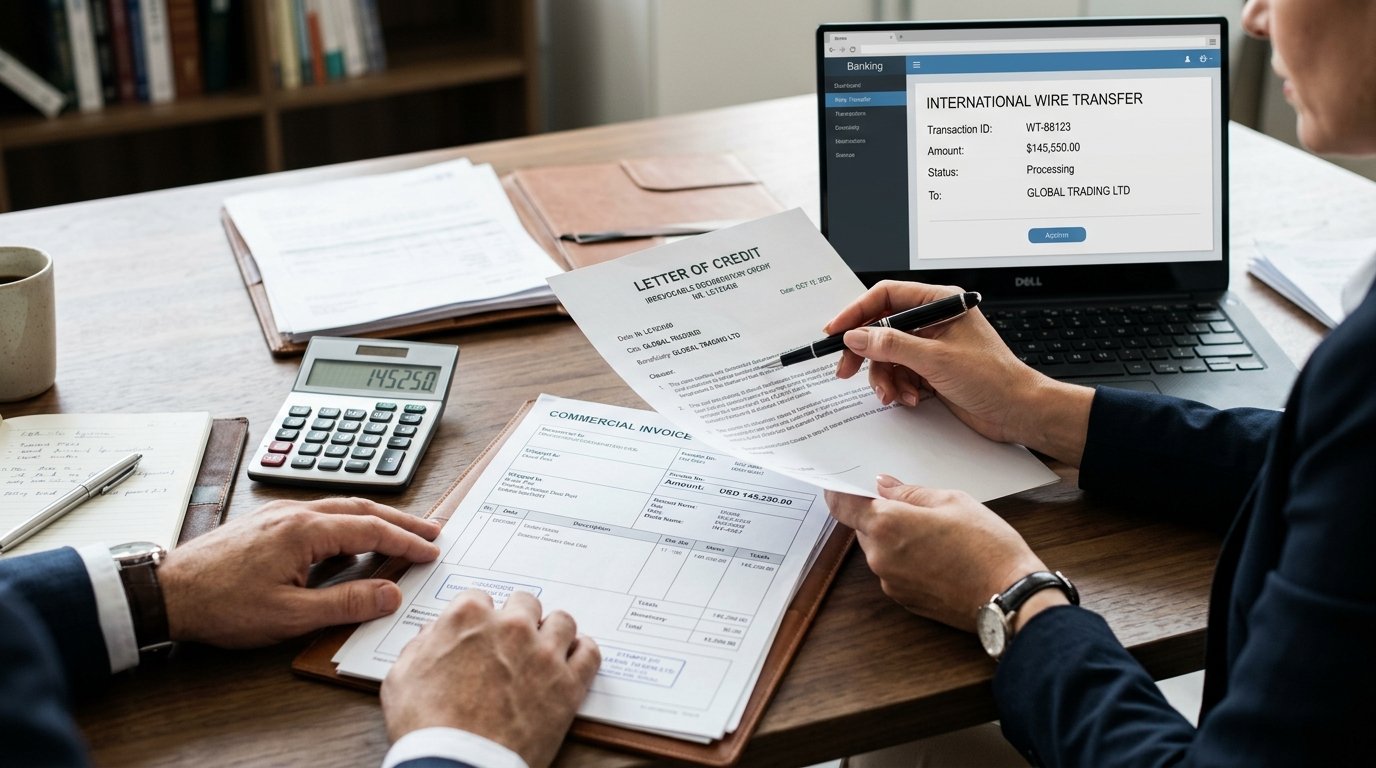
One of the most common questions from first-time buyers sourcing from Vietnam: "How do I pay the supplier safely?"
Understanding payment terms is critical for protecting your investment while maintaining good supplier relationships. This guide covers the most common payment methods used in Vietnam sourcing, their pros and cons, and our recommendations.
Payment Method #1: T/T (Telegraphic Transfer / Bank Wire)
How it works: Direct bank-to-bank transfer. The most common payment method for Vietnam sourcing.
Standard T/T Terms:
| Stage | Payment | Condition |
|---|---|---|
| Deposit | 30% of order value | Paid after order confirmation, before production starts |
| Balance | 70% of order value | Paid after QC inspection passes, before shipment |
Pros: Simple, fast, low bank fees ($15–40 per transfer), universally accepted.
Cons: Limited recourse if supplier doesn't deliver. Deposit is at risk.
Our advice: 30/70 T/T is the industry standard. For first orders with new suppliers, this strikes a good balance between risk and trust.
Payment Method #2: Letter of Credit (L/C)
How it works: Your bank guarantees payment to the supplier's bank, conditional on the supplier providing specified documents (bill of lading, inspection certificate, etc.).
Pros: Strong protection for both buyer and seller. Payment is released only when conditions are met.
Cons: Expensive (bank fees 1–3% of order value), complex documentation, slow to set up.
Best for: Orders above $50,000, new supplier relationships, or when extra security is needed.
Payment Method #3: Alibaba Trade Assurance
How it works: If you find suppliers on Alibaba, their Trade Assurance program offers payment protection.
Pros: Dispute resolution mechanism, some buyer protection.
Cons: Only covers Alibaba transactions, limited to suppliers on the platform, dispute process can be slow.
Note: Many of the best Vietnamese factories are NOT on Alibaba. Trade Assurance is not a replacement for proper supplier verification.
Payment Method #4: PayPal
How it works: Online payment, sometimes used for samples or very small orders.
Pros: Buyer protection (chargeback possible), fast, easy.
Cons: High fees (3–5%), not practical for large orders, many Vietnamese factories don't accept it.
Best for: Sample payments only.
Payment Method Comparison
| Method | Safety | Cost | Speed | Best For |
|---|---|---|---|---|
| T/T (30/70) | ⭐⭐⭐ | Low | Fast | Standard orders |
| Letter of Credit | ⭐⭐⭐⭐⭐ | High | Slow | Large orders, new suppliers |
| Trade Assurance | ⭐⭐⭐ | Medium | Medium | Alibaba suppliers only |
| PayPal | ⭐⭐⭐⭐ | High | Fast | Samples only |
Payment Safety Tips
- Never pay 100% upfront — especially to a new supplier
- Verify the bank account matches the company's registered business name
- Always verify the supplier first — payment disputes are easier to prevent than to resolve
- Get a QC inspection before releasing the balance payment
- Keep written records of all payment terms in the purchase order or contract
- Consider a sourcing agent who can inspect before you pay the balance
What Primo Sourcing Recommends
For most buyers sourcing from Vietnam:
- Standard: 30% deposit, 70% before shipment (T/T) — after QC inspection passes
- First order with new factory: Same as above, but insist on our pre-shipment inspection before releasing balance
- Large orders ($50K+): Consider Letter of Credit for additional protection
- Samples: PayPal or T/T, $50–500 depending on product
Have questions about payment terms? Contact us — we help buyers navigate this safely every day.
Our sourcing team is based in Ho Chi Minh City, Vietnam with 10+ years of hands-on experience visiting factories, auditing suppliers, and managing export orders for international buyers across 30+ countries. Articles are based on our first-hand sourcing experience and verified industry data.
Learn more about our team →